
“If you can say Phoebe, Niamh, and Choledocholithiasis, I promise you can say my name without having a stroke”
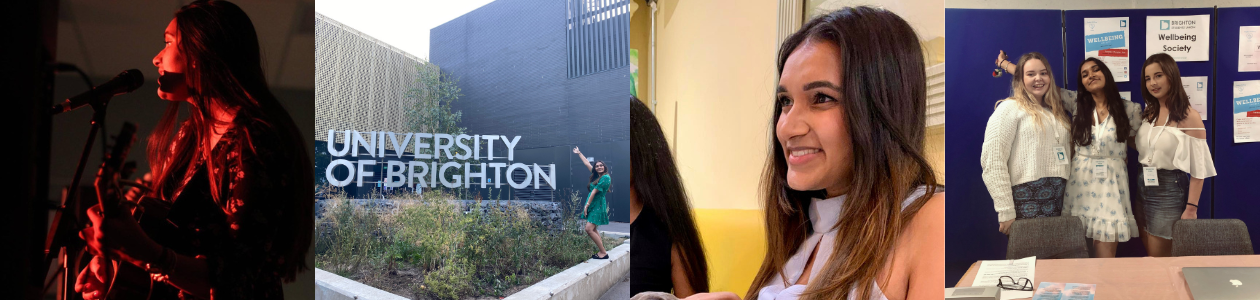
I’ve been trying to find the words to talk about pronunciation of names for a while. With my Zoom graduation having just happened, it was the perfect moment to reflect on the topic. Our university sent out optional forms to fill out months before the event, for anyone who thought there may be an issue with name pronunciation on graduation day. I sent mine back after asking about six people how they’d describe pronouncing my name (hint: it’s pronounced exactly how it’s spelled), only for them to butcher it on the day anyway. I even took the courtesy of sending in “the White way of saying my name”, to make it easier for them, and it still ended in me feeling ashamed on the day.
(Quick disclaimer: this obviously isn’t a rant directed at my university, or the poor woman who was under the pressure of saying everybody’s names via Zoom on the day. This is a problem that affects ethnic minorities for their whole lives – this event just spurred on the conversation.)
“When you yourself are different, it’s very easy for the people around you to tell you who you should be”
Gerardo Ochoa
People with ethnic names will recognise the excruciating moment where someone is going down a register, and the awkward pause and hesitancy indicates their name is the next on the list. This happened to me at endless events, from school registers, to induction days, to swimming galas. A wonderful TEDx talk by Gerardo Ochoa, a first-generation college graduate and Latinx immigrant, discusses this exact topic and I’d heavily recommend giving up a few minutes of your time to watch it, or at least read the summary blog post. Gerardo’s name was swiftly changed to “Jerry” when he was nine years old, by a teacher who, by her own choice, changed his name when she couldn’t pronounce “Gerardo” off the register. Gerardo comments that “she not only changed my name, but the rest of my life”.
A similar thing happened to me. As the first-born child of two immigrants, English is my second language (Tamil being my first). As I started at an all-white nursery at three years old, my name, until that point, had always been pronounced correctly (for the record, it’s said exactly how it’s spelled, I can’t really elaborate much more than that). Almost nineteen years later, I realise that someone at that nursery decided they couldn’t pronounce my name and chose to say it differently. At the time, I was still learning to speak English as a second language and at such a young age, I didn’t think anything of it. In fact, as I continued through my first years at school, I didn’t even notice it – it was like my teachers were teaching me to say my own name wrong. Particularly when you’re the child of immigrants, you’re supposed to keep your head down and respect everybody else, which in this case, tends to mean letting everyone say your name wrong.
I went to two very close-knit schools, in a relatively small town, so the incorrect pronunciation of my name spread like wildfire. People knew me before I knew them, and they knew me by the incorrect pronunciation of my name. As I moved away for university, I didn’t even realise that for the first time in my life, I had control over how people pronounced my name. I continued with what I had always known, until I made my first few Tamil friends in my third year. It was genuinely the first time in my life that anyone pronounced my name right, but also the first time that I didn’t feel ashamed of how apparently difficult “Thivya” is to pronounce. Ethnic minorities spend their whole lives accommodating for the needs of white people, and in this case, it was changing the “Th” to a “T” in my name because they find that easier to say. Honestly, I am totally okay with this pronunciation of my name, because I’d rather have people mispronounce my name in a way that I like and approve of than have them absolutely murder it (some of you will recognise my slogan: “Tiveeyah, like the activia yoghurts”).
When I watch Geraldo’s talk, I’m reminded of an episode of The Suite Life on Deck where London Tipton gets intimidated by a Tamil name and proceeds to say “I’m gonna call you Buffy”, which is followed by laughter from the audience. A joke like that would never land nowadays. The fact that this was broadcast to children all over the world and followed by laughter means that there’s a generation of people who saw this behaviour be normalised on television. In Gerardo’s talk, this kind of person is known as an “evader”; the person that says “do you have a nickname?” or “can I just call you ________?”. The person that makes you feel like you don’t belong. A similar event can be taken from a radio interview I did a few years ago around the time of the release of my EP: the show host said “I think you should just go by your first name instead”, implying that my full name was too long.
We know that non-White names negatively impact your chances of being hired for a job in Western countries, with one study finding that white-sounding names were 28% more likely to get an interview callback. A study from Stanford University and the University of Toronto found that nearly half of Black and Asian job applicants who altered their applications did so by changing the presentation of their name. This was done in an attempt to change any racial cues in their applications, and somewhat unsurprisingly, it works. The research found that those who “whitened” their resumes were twice as likely to get an interview callback, compared to those who did not alter ethnic details on their application.
Another study found that when students of colour had their names mispronounced in the classroom, it resulted in reduced social and emotional wellbeing. Consequently, this reduced their ability to learn and resulted in reduced academic success. The study also found that this mispronunciation created a sense of shame and disassociation from the students’ culture, developing a racial microaggression. The truth is that rejecting the minor effort needed to say someone’s name correctly stems from centuries of racial discrimination. Ethnic minorities have been “the other” for so long, but we have also been “the lesser”. I find huge comfort in seeing public figures like Kamala Harris publicly correcting the mispronunciation of their name, reminding us that there is no shame in reclaiming our identities.
Chances are, I will continue to pronounce my name the way it has always been pronounced, but I can’t tell you how much it means when people ask me how I’d like them to say it. So, I’ll leave you with some actionable takeaways: things which have helped me pronounce other people’s names, and things that I wish I could tell people who struggle to pronounce mine.
- Ask how to pronounce my name. Please don’t just confidently butcher it.
- Admit when you’re having difficulty with my name. I can help you. Clarification is better than mispronunciation.
- Don’t give someone a nickname just because you can’t be bothered to try.
- I PROMISE you, many ethnic minority names (and definitely Tamil names) are pronounced exactly how they are spelled. Literally just read the letters. None of these sounds are unfamiliar to you.
- Don’t make it a big deal. Once you’ve got the pronunciation, thank the person and move on – don’t talk about how ridiculously hard it is to get your head around. It makes people who already feel excluded, feel even worse.
- Be respectful.
I hope this post has addressed some of the issues people seem to have with name pronunciation, and I hope those actionable takeaways help. As I end this post, I want to reiterate that this doesn’t come from a place of anger but rather a place of care; I want to help get rid of the painful awkwardness around these things. I find comfort in the fact that I’m not alone in these experiences but it’s also disturbing to see the size of the problem. Be humble, help us feel seen, and just listen.
P.S. Congratulations, class of 2020!
 Thivya K
One thought on ““I’m not even going to attempt to pronounce that””