
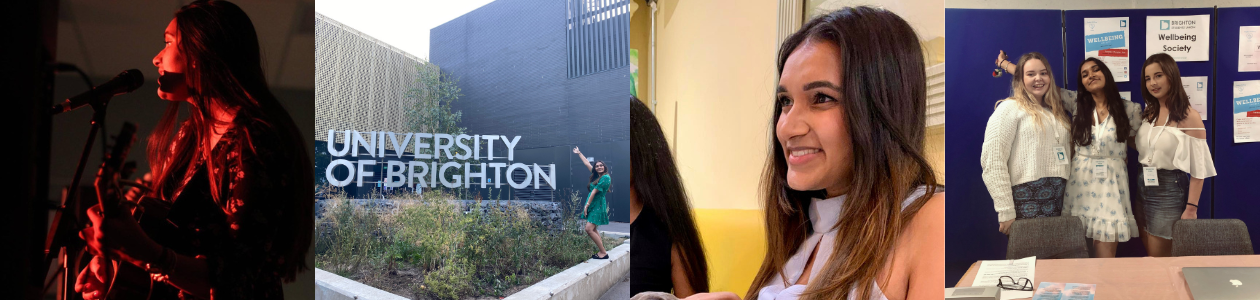

My self-esteem was so heavily affected by the prospect of discrimination that I had no choice but to find other ways to boost it.
I grew up in a primarily White town, where people of my ethnicity are very few and far between. Despite speaking Tamil as my first language, I quickly grew into only communicating in English, even with my parents. As I grew older and felt more of a pressure to hide my heritage, I became more aware of how this would eventually lead to me losing a massive part of myself and I just had to accept it.
With this acceptance came a lot of (mildly, if not definitely racist) comments – from friends, family, anybody I made small talk with – “would your parents be annoyed if you married a White guy?”, “did your parents make you go for medicine?”, “how is your wedding going to work?”, “mixed race kids are so cute!”…the list goes on. Racism is subtle – I often wouldn’t even notice it until after I looked back at an incident. I would joke with my Asian friends about the fact that saying “Eastbourne” as an answer to “where are you from?” would often be followed by “no… Where are you actually from?”, but actually it’s not something to joke about because casual racism isn’t funny. These are the things that accumulate to a point where you’re always aware that you don’t quite fit in.
Everyday racial bias is very real – I grew up at wonderful schools where I thankfully didn’t experience racism directly, but I was subconsciously aware of how I was different. In a twisted way, the fact that I didn’t fit the ideal mould that my school threw at me meant that I had to force myself to stand out in other ways. My self-esteem was so heavily affected by the prospect of discrimination that I had no choice but to find other ways to boost it.
Confiding in Kamsi and Thulasy at the end of last term, I told them that someone had recently told me I was pretty but because of the colour of my skin I could never truly believe it. I had always thought it was just a general lack of self-esteem but for the first time in my life I could actually pinpoint why I felt this way. I spent my entire life having the “perfect girl” put in front of me and God, I looked absolutely nothing like her. We opened up a really honest conversation about how deeply we internalise racism and colourism – our peers, social media, advertising and the attitudes of other generations contribute towards a sense of always feeling slightly out of place.
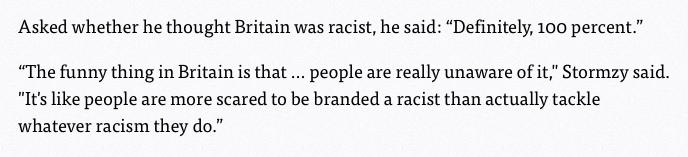
In 2019 we’re very fortunate to have much wider representation across the media than we did 20, or even 10 years ago. The smallest changes can make the biggest difference: a study conducted at the University of Edinburgh found that the introduction of a range of skin tones in emojis boosted racial inclusion on social media, contrary to the initial worry that skin tones could be used in inappropriate or abusive manners. I’m not surprised – when you’ve spent your whole life only seeing a particular type of person in mainstream media, this was a brilliant move to allow for better self-representation and more inclusivity for otherwise under-represented groups.
I was well aware of under-representation by the time I was in sixth form; for example, the lack of diversity in the prefects and teachers at schools, or in leadership roles in business or the medical field. This all convinced me not to get my hopes up for anything – I would probably be held back by the colour of my skin. Everyday racism gets underscored by extremes such as racially-motivated violence and police killings of ethnic minorities, so we learn to let the little things slide just to get by in a society that is dominated by white people. When I mentioned these ideas to one of my other friends, he added that his achievements were rarely truly applauded by his peers because he was from an Asian background – as if it’s natural to be hitting straight A*s or to be musically talented just because you’re Asian. The fact is that he would have to work just as hard as anybody else to reach those goals but many people never congratulated him enough or appreciated his hard work due to this everyday racial bias.
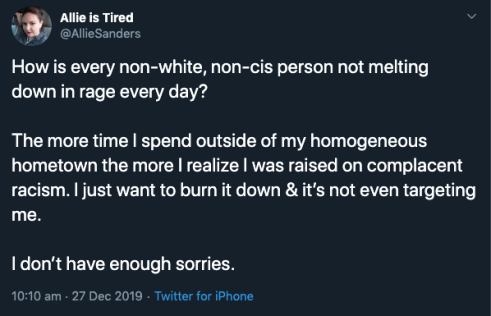
Until quite recently, most people on TV screens, magazines, or film posters, would be white. Sports personalities, musicians, newsreaders, everyone – I very rarely saw diversity face to face, let alone in mainstream media and that really impacted on the first few years of my life. It wasn’t until I got to university, in a much more diverse area, that I was meeting people from the same ethnic background as me, and honestly I felt out of place there too. Throughout my whole life I had been conditioned to be a certain way and with that came this need to cover up my culture and heritage. In my third year at university I finally feel like I’m embracing my culture and opening up a part of myself that I was hiding for the majority of my life – I have my friends to thank for that. My mum is over the moon that I now have Tamil friends and I know it’s because she recognises that I feel less alone now.
–
I really believe in opening up these difficult conversations because it can be life-changing for someone who doesn’t get opportunities to talk about these things. I was talking to a medical professional a while ago about specialities within medicine and we eventually reached the topic of sexual health. I told her that it could be really scary for some people, particularly from conservative backgrounds, to discuss it and for that reason it would be great to be a point of trust for somebody like that. The same thing applies in the context of racism; opening up a tough conversation often provides a support system to somebody that might not otherwise have it.
I would give anything to erase all the times when I worried about my skin being too dark or my body not looking a certain way. I would give anything to change the mindset of 16-year-old me, who was convinced that skin colour dictated my advances in the professional world. The reality is that I shouldn’t even have to write about things like this, because it shouldn’t matter and therefore it shouldn’t even be up for debate. Similar to when I wrote about sexual harrassment, I’m almost wasting my skills discussing these topics because I shouldn’t have to fight so hard to give them a voice. Given the current political climate, the future is looking like a nightmare, but young people in particular are very strong-minded and the world is definitely changing for the better.
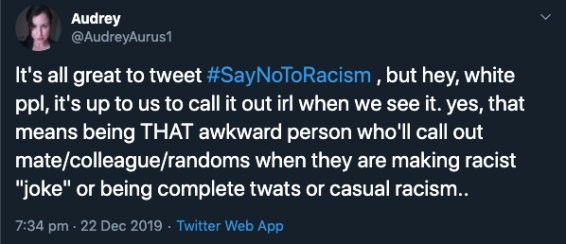
So talk more openly about racism and be honest with yourself about what you might be doing to contribute to it. If you don’t think you’re contributing to it – what more can you do to stop it? The first step is recognising casual racism when you see it and honestly it took me years to do that. Every day, there are people working much harder than I am to dismantle centuries of racism; it still exists everywhere and we need to be using our platforms to bring about change.
A related article which I found really interesting: 3 Young Women On Dealing With Racism At British Universities
 Thivya K
Thank you so much for this honest and open post. I could relate so much and found your stance very thoughtful. As I recently wrote a post on my experience with racism I would love to invite you to have a read. It is called https://searchingforconfidence.wordpress.com/2019/10/02/free-yourself/and talks about keeping your self-esteem no matter what and seeing you there would be amazing. All the best to you
LikeLike
This is an excellent post. We are not going to get anyway in 2020 or any other year unless we have an honest conversation about what everyone can see in front of them. The reason we know Dickens today is because he had the guts to say what he saw everyday when he walked outside his front door. Tomorrow belongs to those who are willing to speak about taboo subjects today.
LikeLike